Getting more Google reviews is not about begging, bribing, or being pushy. It is about building a simple, repeatable follow-up system that makes it easy for real customers to leave honest feedback at the right time.
One yoga studio owner proved this in a very practical way. She went from 8 Google reviews in 22 months to 8 reviews per month by replacing random asks with a consistent post-service review process, and her retention improved at the same time.
The Short Answer
If you want more Google reviews, the safest and most effective approach is this: ask after the service, make the review link easy to access, and follow up once or twice in a natural, compliant way.
Google allows businesses to encourage genuine reviews, but it does not allow incentives, pressure, review gating, or asking for specific content in a review.
Why Most Businesses Get Stuck
Most businesses do not have a review problem. They have a timing problem, a friction problem, or a consistency problem.
A verbal asks at the front desk, a sign on the wall, or an occasional reminder post usually fails because customers forget, get distracted, or do not know what to do next. The result is predictable: happy customers mean well, but the reviews never happen.
The fix is not to ask more loudly. The fix is to make the next step effortless.
The Review System that Worked
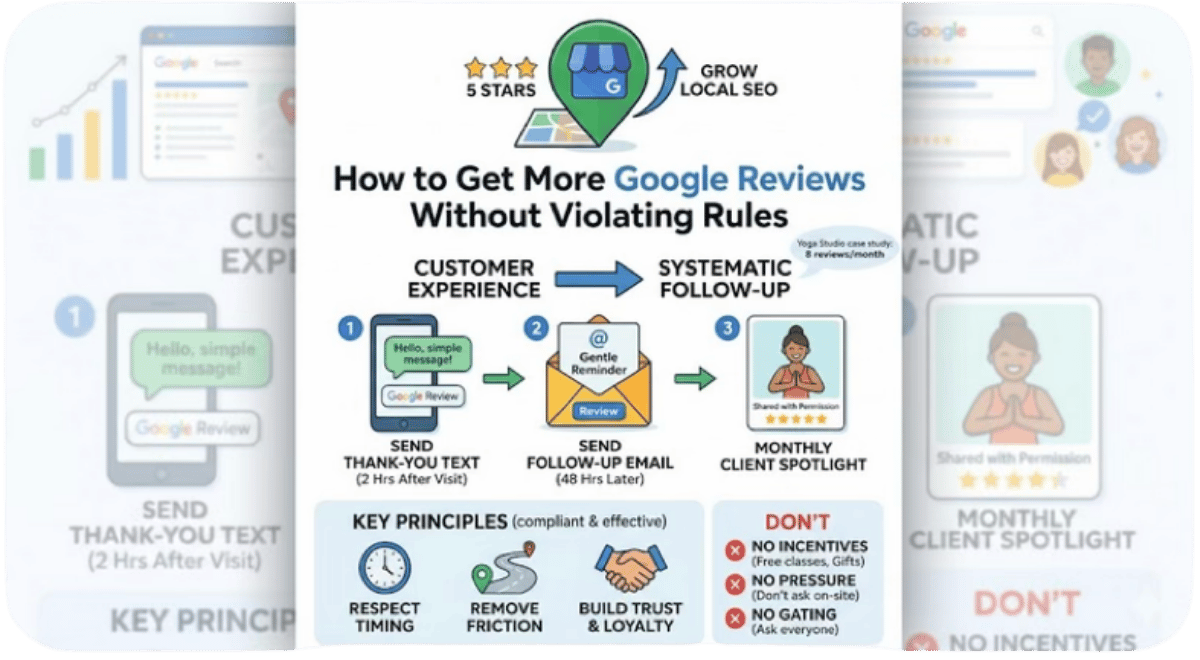
The system that changed everything was simple and customer friendly. It had three parts, each designed to reduce friction and increase follow-through.
1. Send a Thank-You Text Two Hours After the Visit
The first touchpoint was a short, automated text sent about two hours after class or service. That timing works because the experience is still fresh, but the client is no longer in the middle of it.
The message should be short, personal, and direct. Thank the customer, including the review link, and avoid any pressure or manipulation.
2. Send a Follow-Up Email 48 Hours Later
The second touchpoint was a simple follow-up email 48 hours later with a one-click review option. This captures the people who intended to leave a review but forgot.
That follow-up matters because intention is not the same as action. A gentle reminder often turns a good experience into a published review.
3. Feature a Monthly Client Spotlight
The third piece was a monthly client spotlight, shared with permission. This publicly recognized a recent reviewer and turned appreciation into part of the brand experience.
That matters because people like to feel seen. When a business consistently acknowledges customers, it builds loyalty, trust, and repeat business — not just more reviews.
Why This Approach Works
This system works because it does three things well: it removes friction, it respects timing, and it feels natural.
It also aligns with Google’s current review guidance, which continues to prohibit incentives, coercion, and attempts to influence the content of reviews. In other words, it helps businesses grow without putting their profile at risk.
The result is not just more reviews. It is better to have reviews from real customers who have had a real experience.
What not to do
Do not offer discounts, free classes, gifts, or other rewards in exchange for reviews. Google’s review policies explicitly prohibit incentives tied to reviews or review edits.
Do not pressure customers to leave a review while they are still on-site. Do not ask only for positive reviews. Do not tell people what to write or ask them to mention specific staff names or phrases.
Google is focused on authenticity, and search systems are increasingly better at identifying patterns that look manipulated.
Why this helps local SEO
Reviews are one of the strongest trust signals in local search. They help customers trust your business, and they help search engines understand that your business is active, credible, and worth surfacing.
That matters for map rankings, branded searches, voice searches, and AI-generated answers, because modern search systems reward businesses that show real-world trust and consistent customer engagement.
In practical terms, a strong review system supports your visibility across Google Search, Google Maps, and generative search experiences.
A Simple Review Strategy You Can Use
If you want a compliant review system, start here:
- Create your direct Google review link.
- Send a thank-you text a few hours after the visit.
- Send a follow-up email 48 hours later.
- Share one client spotlight each month with permission.
That is enough to build a system that is simple, consistent, and scalable.
Final Takeaway
If you want more Google reviews, stop thinking about how to ask harder. Start thinking about how to make the process easier, more natural, and more consistent.
That is what creates growth. That is what improves retention. And that is what helps local businesses build trust in a way Google can support.
What is your current review strategy?