
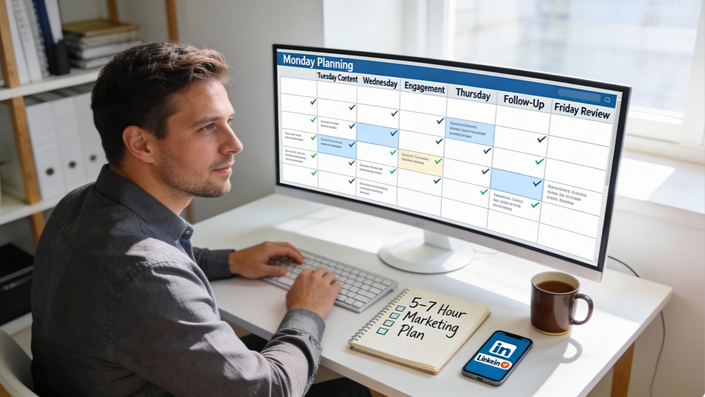
A Realistic Weekly Marketing Routine For Small Businesses
Most owners do not need a full-time marketing department; they need a lean routine they can actually stick to. This breakdown shows how to cover content, visibility, and follow-up in about an hour a day during the week.
Block The Right 5–7 Hours
- Choose three 60–90 minute marketing appointments on your calendar and treat them like client work.
- One block is for planning, one for content creation, and one for follow-up and metrics.
Key takeaway: When marketing has a reserved time slot, it stops being the task that always gets pushed to tomorrow.
Monday – Plan Content Around One Theme
- Pick a single weekly theme that matches your core offer, such as Google Business Profile mistakes or LinkedIn content that converts.
- Outline three short posts and one longer piece (blog or LinkedIn article) that all tie back to this theme.
Key takeaway: Planning once reduces daily decision fatigue and keeps your messaging consistent.
Tuesday – Create And Schedule Posts
- Draft two or three posts in one sitting while you are in writing mode.
- Repurpose: turn one post into a short video script or carousel outline to use later in the week.
Key takeaway: Batching content is faster and keeps your tone cohesive.
Wednesday – Engage And Start Conversations
- Spend 20–30 minutes commenting thoughtfully on posts from ideal clients and partners.
- Reply to every comment on your own content and invite people to share more context.
Key takeaway: Visibility without conversation rarely turns into revenue; midweek is ideal for relationship building.
Thursday – Lead Nurture And Follow-Up
- Review any DMs, email replies, or form fills from the week and send short, helpful follow-ups.
- Offer a simple next step, such as a quick audit call or sending a checklist.
Key takeaway: A gentle, value-first follow-up beats aggressive selling and fits how small businesses like to buy.
Friday – Review Metrics And Adjust
- Check basic numbers: profile views, post impressions, comments, messages, and calls booked.
- Decide what to repeat next week and what to drop, based on what actually led to conversations.
Key takeaway: A 15-minute review keeps you improving without getting lost in complex dashboards.
Weekend – Optional Light Touch
- If you have energy, share one story-style post about something you learned that week working with clients.
- Otherwise, stay offline and come back Monday with a clear plan.
Key takeaway: Rest is part of a sustainable marketing system.
If you want a simple template for this 5–7 hour routine, save this post and set three marketing appointments on your calendar for next week. Ready for help building a custom weekly workflow for your business?
If this was helpful, please repost to help save a small business from staying invisible online.